SEMA4Molecular Profile
A clinical decision support tool for oncologists.




2 months
1-N project
October 2021
UX Designer
Background
Originating as a Mount Sinai spin-out, Sema4 was established to support genetic testing in oncology and reproductive health. This close partnership granted us deep, direct visibility into clinical workflows. By virtually shadowing tumor board reviews, where oncologists collaborate to brainstorm patient diagnostic and treatment strategies, I was able to act as a fly on the wall and observe key operational pain points firsthand.

Problem space
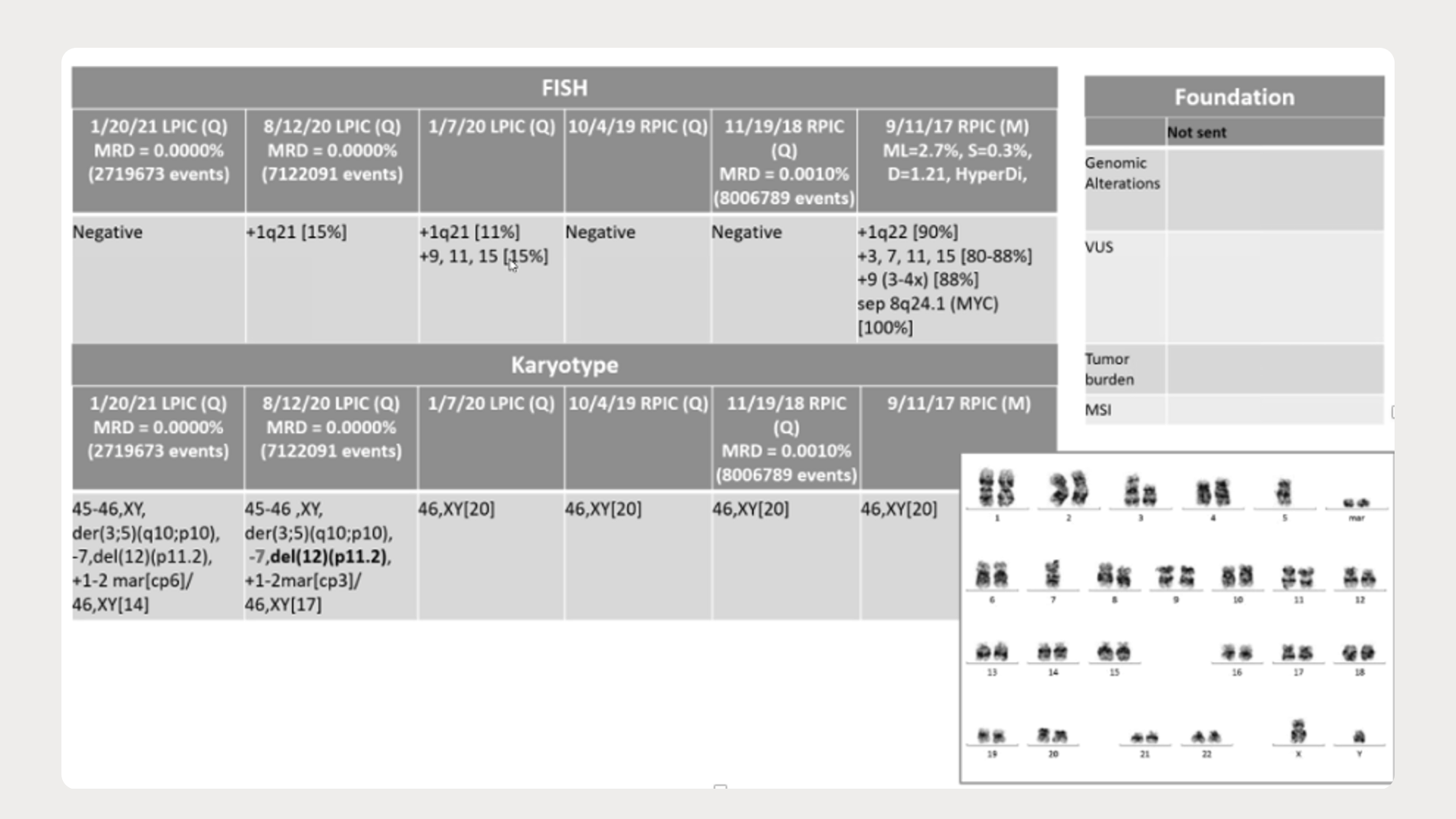
A patient's molecular profile is often highly complex, incorporating a vast array of genomic and cytogenetic data. During tumor board reviews, I observed that the slides conveying this information were cluttered and difficult to navigate, which severely hindered clinicians from making timely treatment decisions.
To resolve this, I proposed designing a digital, interactive molecular profile tailored to streamline workflows for oncologists in both clinical and research environments.
Concept design
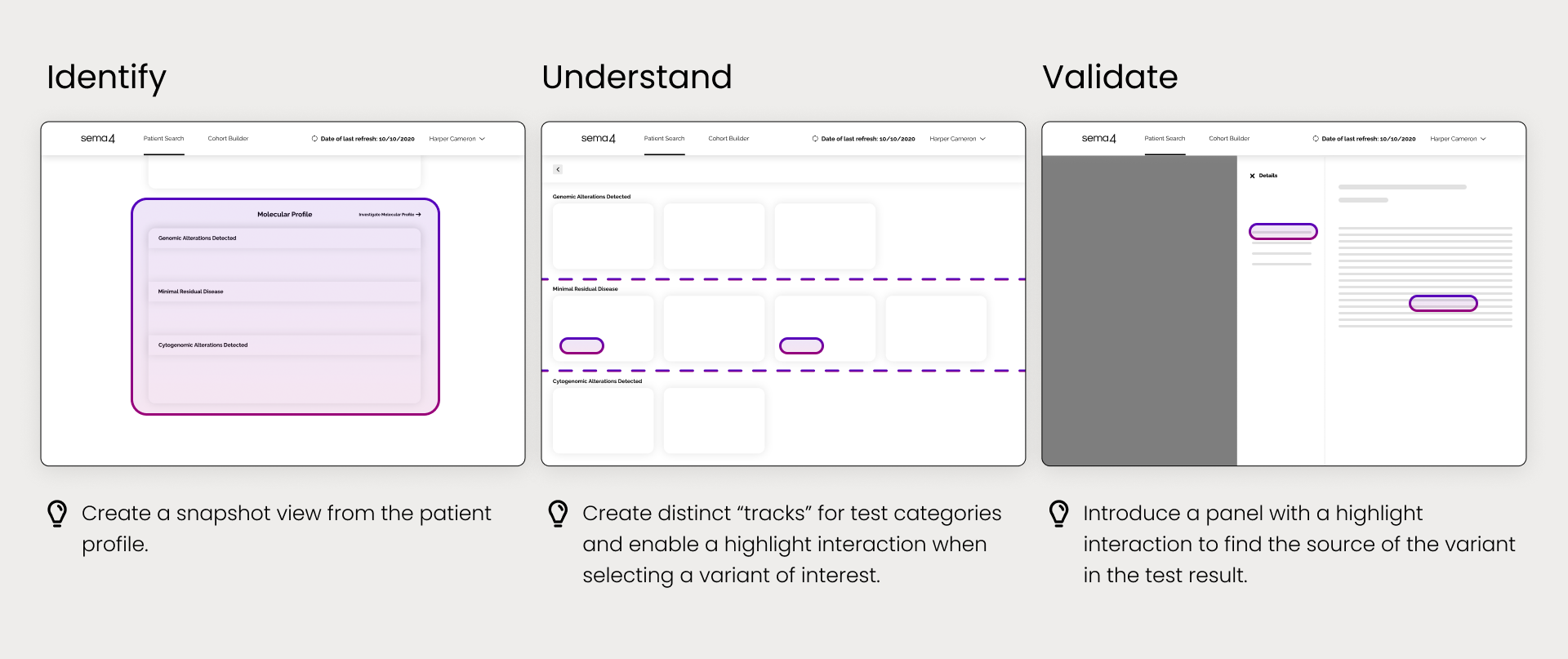
To guide the end-to-end experience, I defined three core Jobs to Be Done (JTBD):
Identify: How can we display critical genomic insights in a rapid and digestible format?
Understand: In what ways can we effectively illustrate trends and progression over time?
Validate: How can we introduce an investigative layer to enable deeper dives into the test results?
I also established key design tenets to guide our decision-making process:

Agnosticism - The design must be both disease- and use-case agnostic to scale effectively. It should support highly complex molecular data (e.g., multiple myeloma) as well as simpler profiles (e.g., lung cancer), while seamlessly accommodating diverse workflows, from collaborative tumor board sessions to independent clinical research.

Contextual Relevance - Surface the right insights at the ideal touchpoint along the customer journey. Utilizing a layered information hierarchy reduces cognitive load and visual clutter, enabling users to quickly locate the exact details they need.
Detailed design
Supporting identification and understanding:
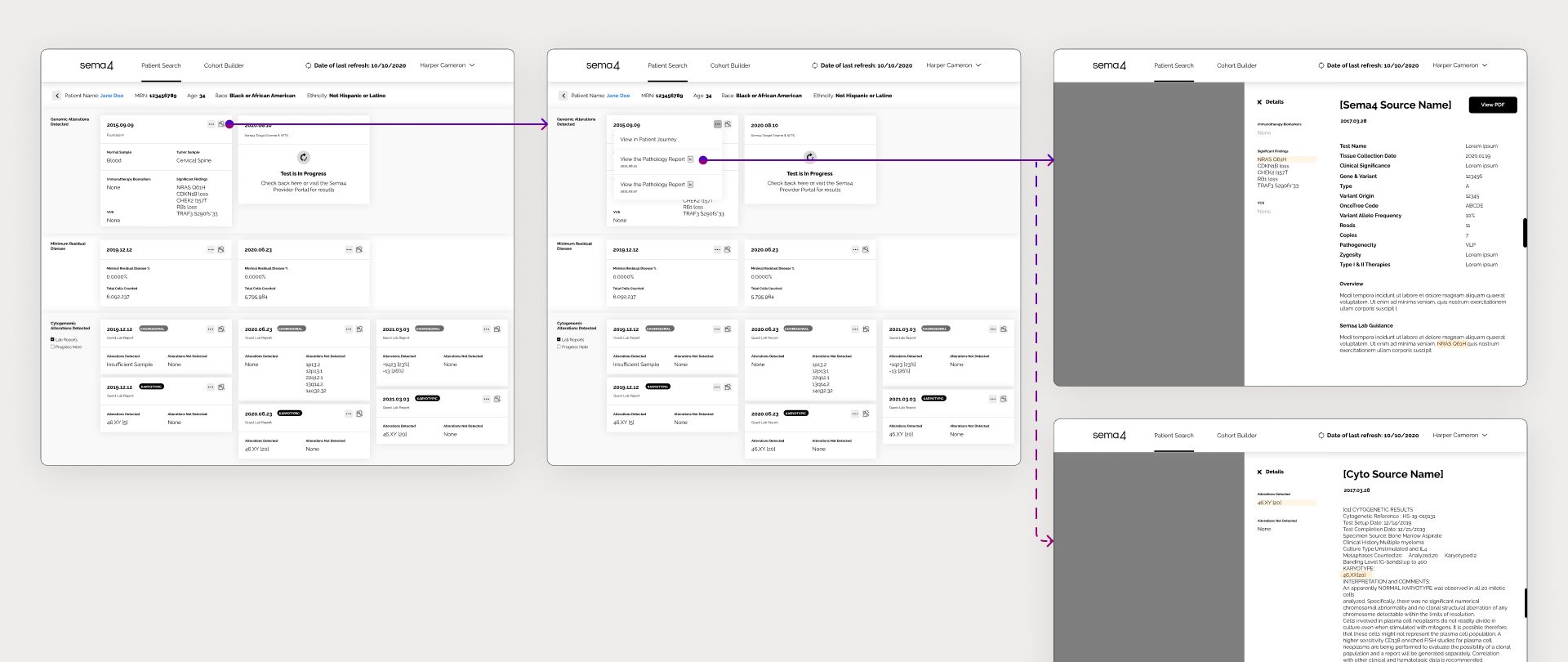
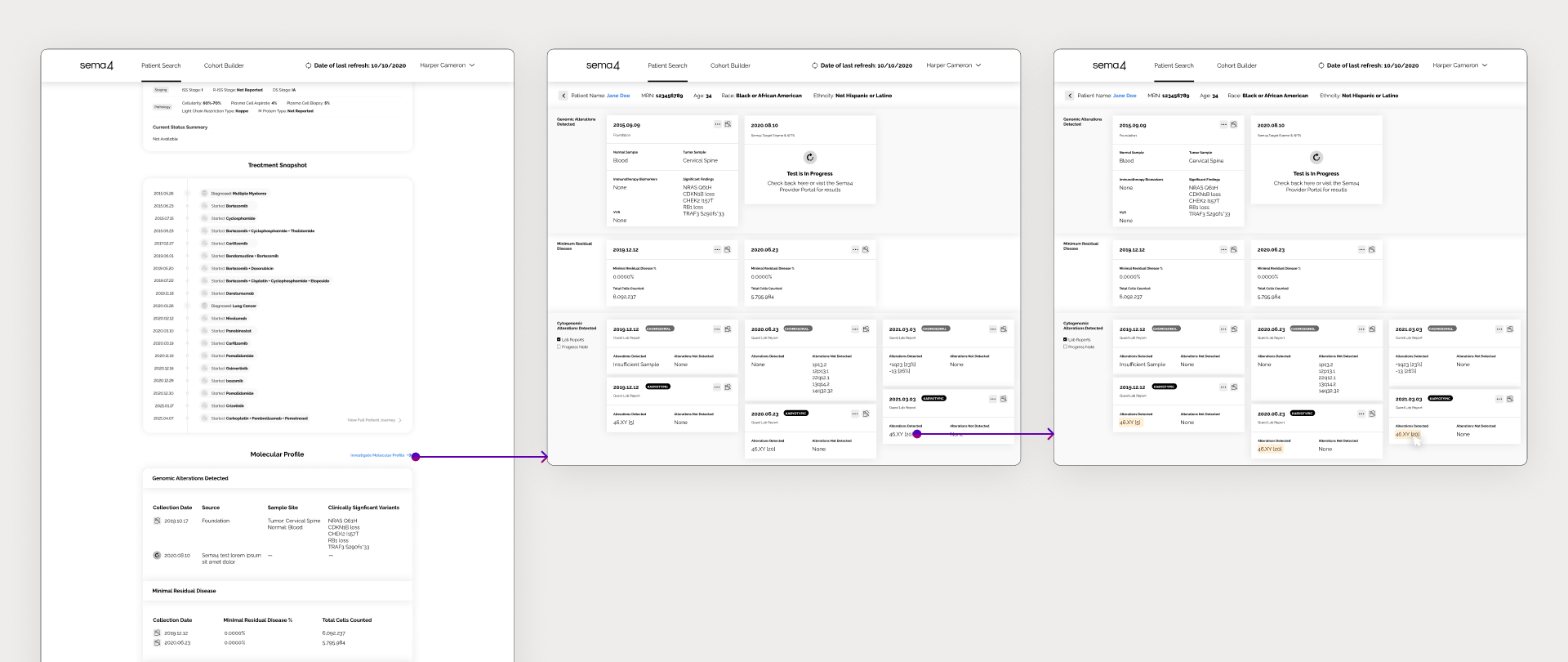
To facilitate quick identification and deeper understanding, I designed a snapshot view of the molecular profile that lets users drill down into a longitudinal history. Selecting any variant highlights matching variants across the timeline to clearly illustrate disease progression.
Supporting validation:
To assist with validation, I built a path from the longitudinal display directly to the detailed report. From this view, clinicians can click on specific genetic findings in the panel to highlight and reveal the corresponding source references within the original document.
Outcomes
More time for what truly matters. Our primary objective was to build an intuitive, highly functional tool designed to save oncologists valuable time. Enabling faster access to clinical information allows physicians to focus more of their attention on diagnostic and treatment decisions to improve patient outcomes.
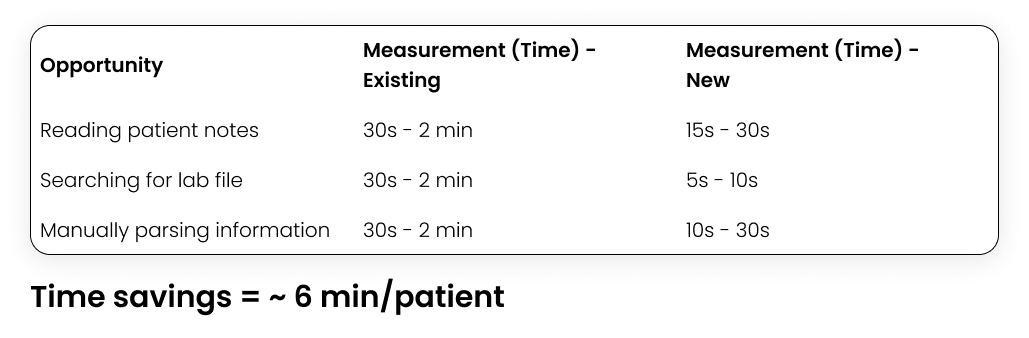
Based on interviews with oncologists, we conducted an analysis of anticipated time-savings. We estimated a reduction of up to 6 minutes per patient, which translates to a significant amount of recovered time over a typical day of seeing about 10 patients.
I departed Sema4 prior to full implementation, so we were unable to collect actual usage metrics.